Best Towel Warmers for Small Bathrooms
Compare Amba Solo and Swivel towel racks by floor space, wall mounting, controls and the difference between warming and room heating.
Choose an Amba Swivel rack when wall mounting is practical and floor space is scarce; choose the Solo 24-inch when you need a movable plug-in rack. A small bathroom can make either awkward if the towel blocks a door or the cord crosses a walkway. Measure the loaded rack and safe electrical location before choosing a finish.
Research-based guidance; we have not tested these products in-house. See our sources and Review method.
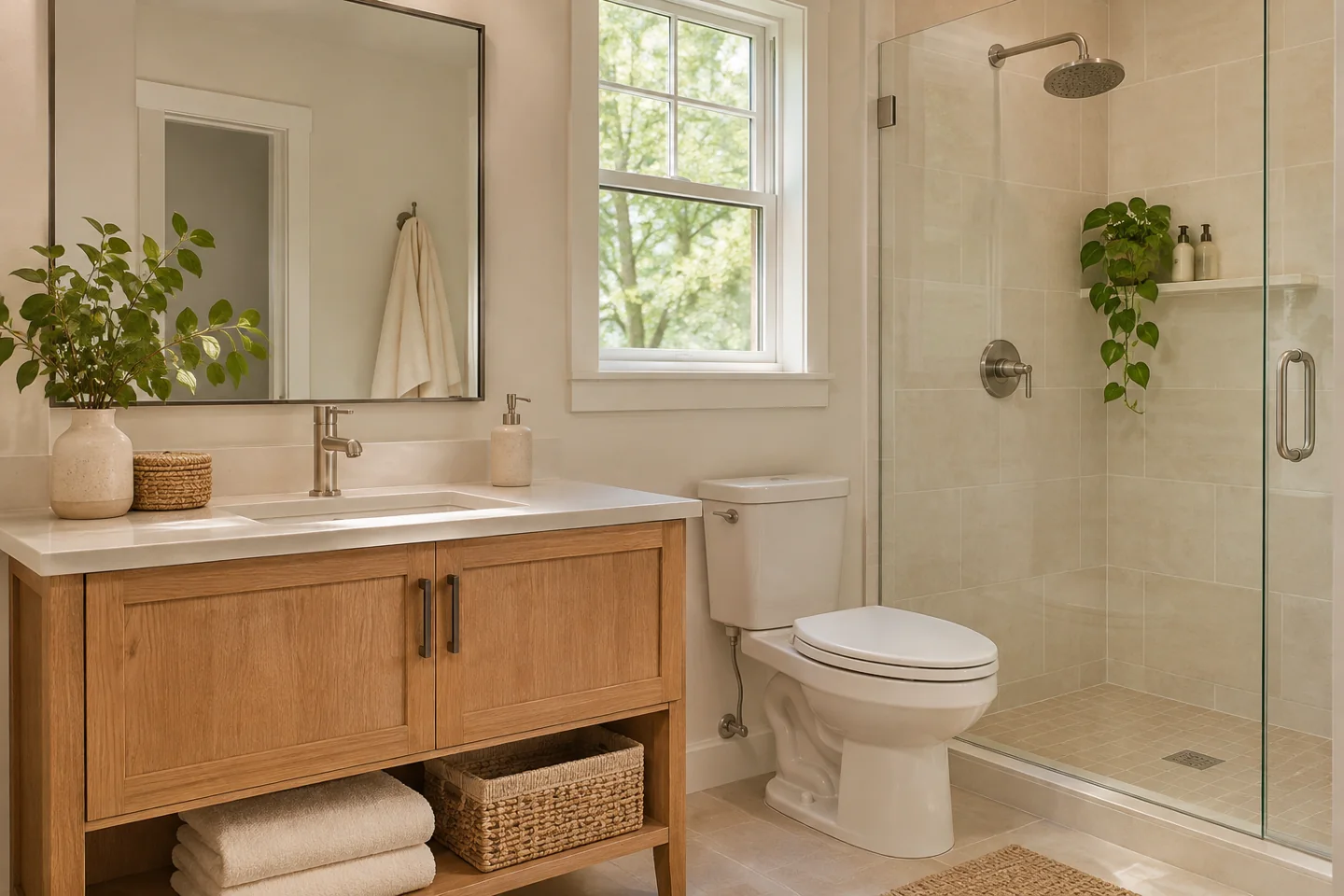
Choose the installation format
| Option | Best fit | Tradeoff |
|---|---|---|
| Amba Swivel SB5 | Keeping floor space clear; individually movable bars | Wall installation and the bars’ swing path need clearance |
| Amba Solo 24-inch SAFS-24 | A movable freestanding rack without wall mounting | Uses floor space and still needs safe outlet access |
| Ordinary towel rail plus ventilation | Drying is the problem and warming is optional | No heated-towel experience, but fewer electrical requirements |
Products in this guide
An unranked index of the products discussed below. Read the guide to compare suitability, evidence and limitations.
Amba Solo 24-inch SAFS-24
Read the guide for Amba Solo 24-inch SAFS-24 →Check the exact model, included accessories, current price, seller and return terms on the retailer’s page.
Swivel: measure the arc, not just the folded rack
Amba’s current Swivel collection includes the five-bar SB5 and three-loop SL3. Both are listed as plug-in/hardwire combo designs. Check the exact installation instructions and supplied parts rather than assuming the electrical work is identical in both modes.
An independently moving bar is useful in a narrow room only when it has somewhere to move. Make a full-size paper plan of the wall and trace the bars with towels on them. Check the vanity, shower door and circulation space. A folded product dimension hides this everyday footprint.
Solo: flexibility with a floor-space cost
The current Solo 24-inch rack is freestanding and plug-in. Amba lists a width of 23.63 inches and height of 38 inches. Include the feet and cord route in your plan; the width alone cannot establish whether the rack fits beside a toilet or vanity.
HGTV’s testing favored the Solo’s build but noted absent automatic shutoff. Verify current controls for the exact unit. HowToHome has not measured towel temperatures or drying time.
Warm towel or warmer room?
A towel rack is primarily a local warming and drying device. Do not size bathroom space heating from its appearance or assume it replaces an exhaust fan. If room heating is the problem, assess that requirement separately with an appropriate professional.
Fold and place towels as directed, leaving the coverage and clearances the manufacturer requires. Overloading a small rack can produce uneven results. Thick towels and room humidity also affect the experience, so a claimed heating time is not a universal promise.
Controls, electricity and everyday use
Check the exact wattage and control options. As an illustration, a 100W device operated for two hours uses 0.2kWh; at an assumed $0.20 per kWh, that is four cents. This is an example, not a measured consumption claim for either rack.
Use the outlet protection, positioning and electrical installation required by the manual and applicable rules. Do not run extension cords across a wet bathroom to make the layout work. Keep hot surfaces and cords out of children’s reach, and let the rack cool before moving it.
Our verdict
Swivel is the stronger space-planning choice when you can install it properly and keep its movement clear. Solo is the practical option for movable placement when its floor footprint is acceptable. If neither fits safely, keep the conventional rail and improve airflow rather than squeezing in another appliance.
Will it sanitize towels? Do not treat ordinary warming as a validated disinfection cycle. Laundering and proper drying remain separate tasks.