How to Organize a Pantry You Can Actually Maintain
Build pantry zones around meals, visibility and safe food storage, with a practical reset sequence that avoids unnecessary containers and wasted space.
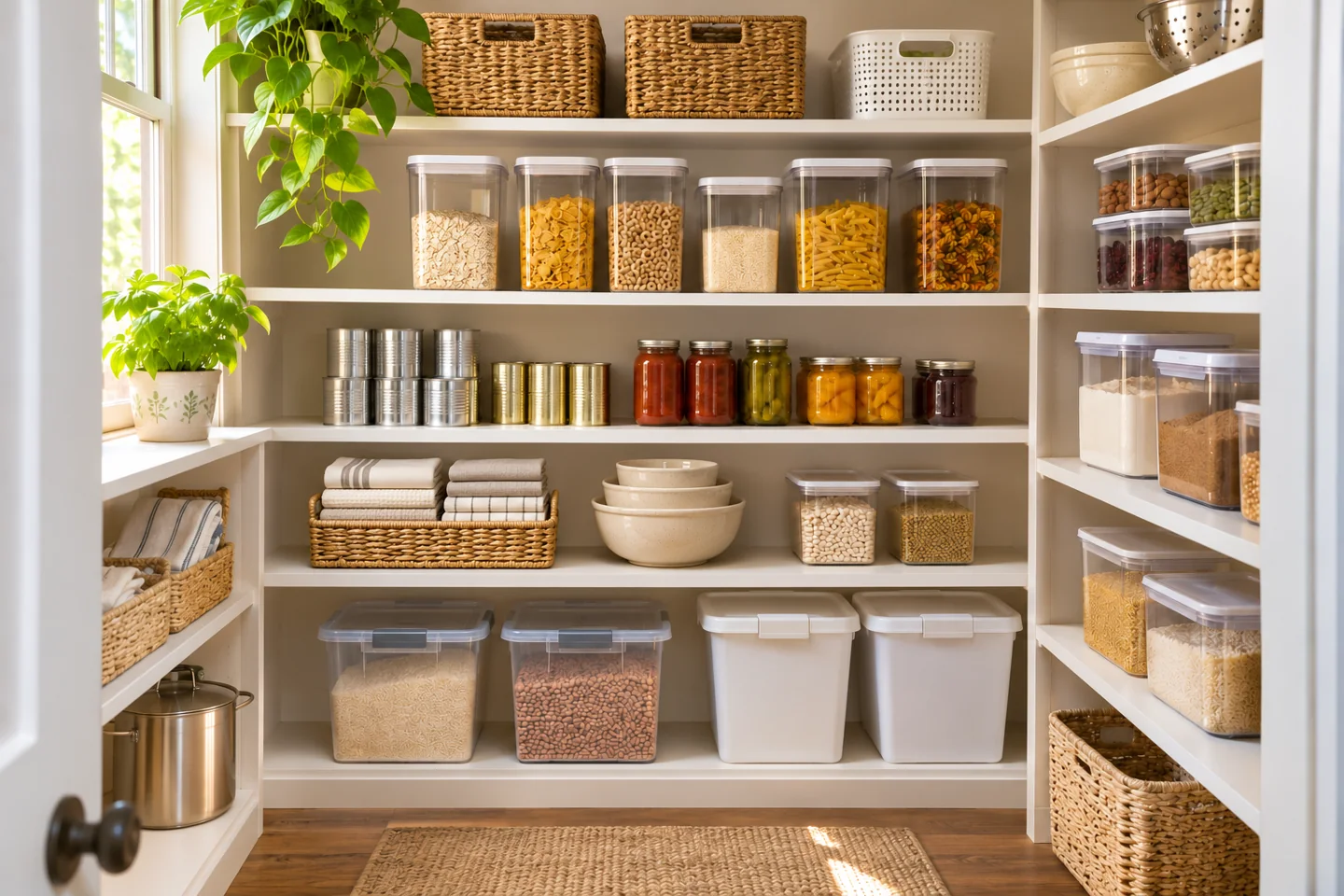
An effective pantry puts the next item you will use where you can see and reach it. Empty one shelf at a time, discard or isolate unsafe packages, group food by how you cook, measure the shelf, then return items with older dates in front. Buy organizers only after that test layout shows a specific access problem.
1. Triage food before arranging it
Make a clear work surface and use four groups: return, relocate, donate if accepted locally, and discard. Follow package instructions first. USDA defines shelf-stable foods as products safe at room temperature, but warns that not every canned item is shelf stable; a can labeled “keep refrigerated” belongs in the refrigerator. Discard leaking, bulging, badly rusted or deeply dented cans and packages with pest damage. Check current FDA and USDA recall notices when a product is in question.
A “best if used by” date usually concerns quality, not a universal safety deadline. FDA notes that US date-label wording is not uniform. Use the FoodKeeper resource for product-specific storage guidance rather than inventing one rule for every grain, oil and can. When spoilage is evident or storage history is unknown, do not taste the food to decide.
2. Create zones that match meals
Broad supermarket categories often produce too many bins. Use the way your household cooks:
- Breakfast: oats, cereal, nut butter and coffee together.
- Weeknight bases: pasta, rice, canned tomatoes and broths within one reach.
- Baking: flour, sugar, leaveners and decorations on a shelf that can hold their combined weight.
- Snacks: portioned items at the eye level of the person allowed to choose them.
- Backstock: duplicates together, behind or above the open package rather than mixed throughout the pantry.
Keep household cleaners, pet products and chemicals away from food. Put heavy containers below shoulder level. Reserve the floor for washable, pest-resistant storage, but keep food off a floor that can flood.
3. Fit the shelf before buying containers
Measure clear width, depth and vertical spacing, including hinges and door trim. A turntable earns its space for short bottles in a deep corner, not for rectangular cereal boxes. A three-step riser helps cans only when the rear labels remain visible. Pull-out baskets work for flexible bags, while a shelf divider stops tall stacks of trays from collapsing.
Decant only when it solves a problem. A food-contact container should be intended for that use, close securely and be labeled with the product and relevant date. Keep cooking directions and allergen information until the food is gone. Do not pour a new batch onto old residue; wash and dry the container between batches. Utility totes from our clear-bin guide are for packaged household storage unless the manufacturer specifically identifies food-contact use.
4. Load for rotation
Place the older duplicate in front and the newer one behind it. Face labels outward, write the open date on foods whose quality changes after opening and keep a short “use next” basket where it will be noticed. Leave a little empty space: if every shelf is packed to its front edge, rotation and cleaning fail.
After two weeks, notice what migrates to the counter or becomes buried. Move that category rather than buying another organizer. Do a five-minute check before grocery shopping and a deeper shelf wipe every few months. Clean spills promptly, look for insects around flour and pet food, and investigate repeated moisture rather than sealing dampness inside a bin.
Useful questions
Should every pantry item go in a matching container?
No. Matching containers can improve visibility for staples, but they add transfer work, hide original directions and may waste shelf depth. Keep products in packages when the package already stores and pours well.
What belongs at eye level?
Put frequently used, safe-to-access items there. Store breakable, heavy, restricted or allergen-sensitive items according to household needs rather than appearance.